
How to Retrofit Your Home for Comfort, Efficiency & Health on Any Budget
A Practical 2026 Guide
If you’re thinking about improving the comfort and performance of your home in 2026, you’re not alone. More and more Australians are looking for practical, affordable ways to make their existing homes warmer, healthier and more energy efficient — without diving into a full renovation.
This guide brings together the same principles I use when I walk through homes with clients, and the same approach my family used to retrofit our own home.
Why retrofit at all?
Most Australian homes weren’t designed for the climates in which they are located. They leak heat in winter, trap heat in summer, and can create moisture and condensation problems that affect health. A good retrofit doesn’t need to be dramatic. It’s simply a thoughtful set of improvements that work together to make your home more comfortable, more efficient, and easier to live in day-to-day. And importantly — you can start wherever your budget allows.
Start with the basics: sealing drafts
Draft proofing is the number one place I tell every household to begin. It’s inexpensive, quick, and you’ll feel the difference almost immediately.
Look for:
gaps around doors and windows
unsealed exhaust fans
cracks in floorboards, skirting, or architraves over windows
old or loose vents
Even a few tubes of sealant and some decent door seals can transform cold, windy rooms into spaces you actually want to be in. Just be sure that you’re bathroom exhaust fan and kitchen rangehood are functional before getting started on draftproofing.
Next, look at insulation
Good insulation is the backbone of a comfortable home. If your ceiling insulation is thin, patchy, or non-existent, that’s your next priority. Just 5% gaps in insulation can reduce it’s effectiveness by half. If you have a suitable house type, consider wall insulation and underfloor insulation too. These steps improve comfort year-round and reduce the load on heating and cooling systems. This isn’t glamorous work, but it’s incredibly effective.
Window treatments and shading
Many households underestimate how much heat moves through glass. Before you think about replacing windows entirely, start with:
thick, well-fitted curtains
pelmets (to stop convection draft behind the curtains)
external shading for summer
cellular blinds or double rollers
These options are far more affordable and can have a significant impact
Your mechanical systems matter, too
If your hot water system is nearing the end of its life, or if your heating and cooling are older and inefficient, switching to modern heat pump technology can give you a big efficiency boost. The key is sequencing. You don’t need to replace everything at once, just plan ahead so each decision supports the next.
A real example: our own home retrofit
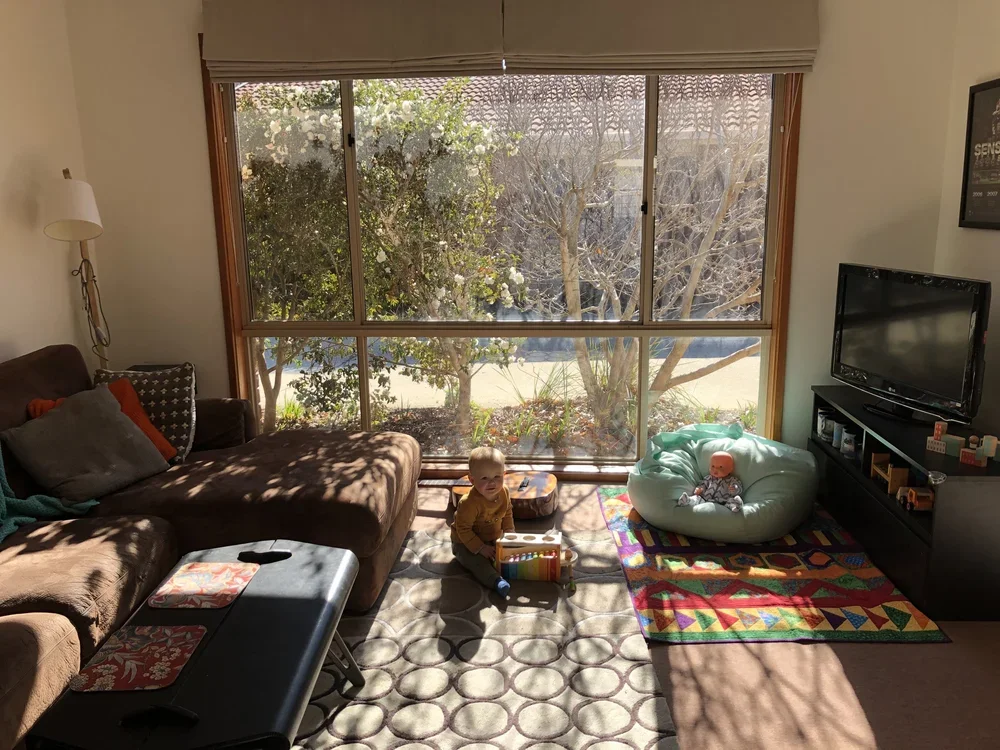
When we retrofitted our home in Canberra a decade ago, we spent around $9,000 on a series of small, common-sense upgrades: draft proofing, insulation top-ups, window treatments, and a few targeted fixes. (I estimate today this would be more like $18,000.) These changes lifted our home from around 2.9 stars to about 5.7 stars, and reduced our heating and cooling demand by roughly 60%. More importantly, it simply became a nicer place to live — quieter, more stable in temperature, and far easier to manage through Canberra’s extremes. Read more about this case study here.
This is the part I want most homeowners to know: you don’t need a huge budget, and you don’t need to renovate. You just need the right sequence.
Where to start if you feel overwhelmed
Most renovation advice focuses on what to buy. The Retrofit Method helps you decide what to do first.
A practical guide to making your home more comfortable, efficient and healthy — without wasting money on the wrong upgrades.
Created for southern-Australian homes with renovation budgets from $500 to $250,000.
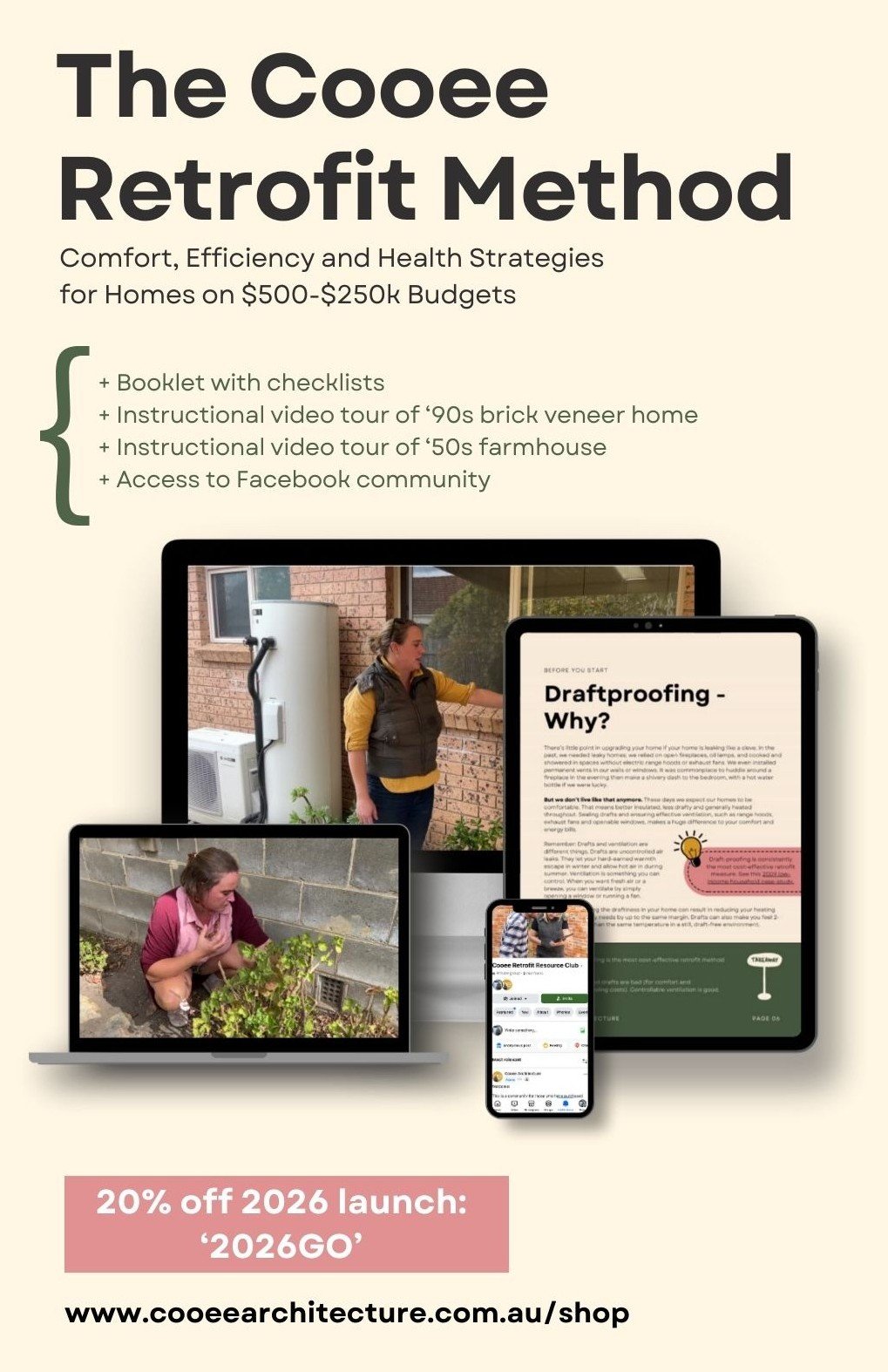
The Retrofit Method includes:
+ A 30-page distilled retrofit handbook (PDF)
+ Two 40–45 minute video walkthroughs of real Australian homes
+ A clear prioritisation framework for deciding what to upgrade first
+ Practical checklists and retrofit planning tools
+ Curated links to trusted resources and products
+ Access to the Retrofit Community Facebook group to ask questions and share progress
Built to save homeowners months of research - and thousands of dollars in renovation mistakes. Check it out here.
I hope it brings you more clarity and confidence to gently chip away at your home goals this year.
Final thoughts
A well-planned retrofit is one of the most valuable investments you can make in your home. You don’t need to do everything, and you don’t need to do it all at once. Start small, choose the steps that suit your budget, and build from there. The first step is making a plan of action, and the Cooee Retrofit Method is designed to help you do that. If any questions pop up along the way, you’re welcome to put them in our Facebook group.

Ready to preview the method?
To see the contents and reviews, click here.